
Category: Understanding IDD Services
If you have a family member with an intellectual or developmental disability (IDD) in Texas, you may have heard the terms HCS and TxHmL. At first, the number of program names, acronyms and requirements can feel overwhelming.
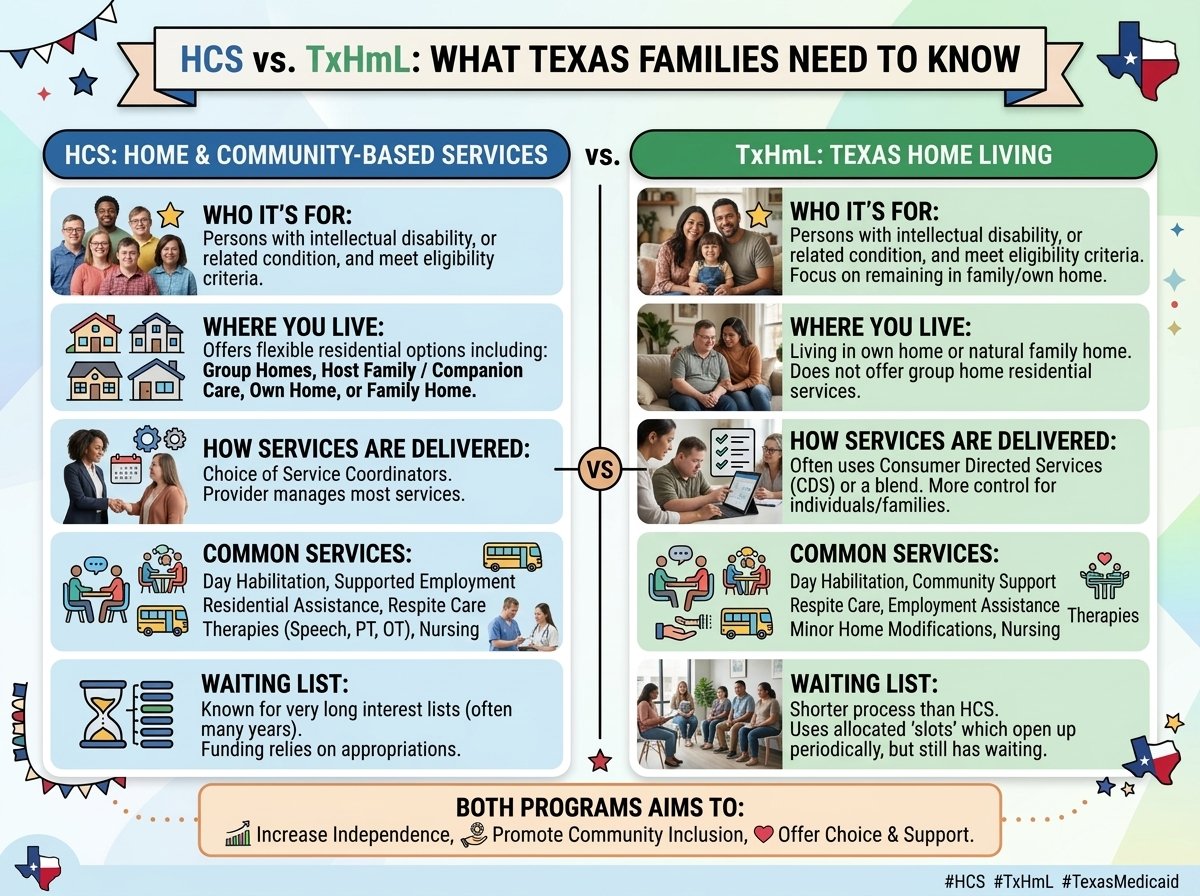
Both programs help eligible Texans with intellectual and developmental disabilities receive services and supports in the community. However, HCS and TxHmL are separate Medicaid waiver programs, and there are important differences between them.
Here is a simple introduction to help families understand the basics.
What Is HCS?
HCS stands for Home and Community-based Services.
HCS is a Texas Medicaid waiver program for eligible individuals with an intellectual disability or related condition. The program provides services and supports that can help a person live and participate in the community rather than receiving services in an institutional setting.
Depending on an individual’s assessed needs and approved plan, HCS services can support different areas of daily life.
An important feature of HCS is that it includes residential service options for eligible individuals who need that level of support.
This can make HCS particularly important for families planning for a loved one’s long-term living and support needs.
What Is TxHmL?
TxHmL stands for Texas Home Living.
TxHmL is also a Medicaid waiver program serving eligible Texans with an intellectual disability or related condition.
The program provides selected services and supports to help an individual continue living in their own home or family home and participate in the community.
TxHmL can provide valuable assistance to a person who lives with family or in their own home but needs additional support to maintain independence, develop skills and participate in everyday life.
How Are HCS and TxHmL Similar?
Although they are different programs, they share an important goal: helping eligible people with IDD receive appropriate services in community settings.
Both are Medicaid waiver programs and may provide supports based on the person’s assessed needs, eligibility and approved service plan.
Both programs also require individuals to meet applicable program and financial eligibility requirements.
What Is the Main Difference?
One of the easiest ways for families to begin understanding the difference is to look at where the individual lives and the range of services the program can provide.
TxHmL is designed for eligible individuals who live in their own home or their family’s home.
HCS offers a broader range of supports and includes residential options for eligible individuals who need them.
For example, an adult with IDD who lives with their parents and needs assistance developing daily living skills may have very different needs from an adult who requires ongoing residential support away from the family home.
The appropriate services should be based on the individual’s needs, preferences, goals and eligibility rather than simply choosing a program based on its name.
Does Having an IDD Diagnosis Automatically Qualify Someone?
No.
Having an intellectual or developmental disability does not automatically mean that a person qualifies for HCS or TxHmL.
Texas uses specific program requirements to determine eligibility. These can include factors related to the individual’s disability or related condition, level of care, Medicaid or financial eligibility and other program requirements.
For this reason, families should avoid assuming that a particular diagnosis automatically guarantees enrollment in either program.
Does Medicaid Automatically Mean Someone Qualifies for HCS or TxHmL?
Not necessarily.
Medicaid eligibility and waiver eligibility are related, but they are not the same thing.
Texas HHSC requires individuals to meet financial eligibility requirements for HCS and TxHmL. HHSC also notes that while some types of Medicaid coverage satisfy the financial requirement, not every type of Medicaid coverage automatically establishes eligibility for these waiver programs.
Program-specific requirements must still be met.
Can Families Simply Choose HCS or TxHmL?
Access to these programs involves more than selecting one from a list.
Texas has processes for determining eligibility and accessing waiver services. Families may work with their Local Intellectual and Developmental Disability Authority (LIDDA) as part of this process.
A LIDDA can be an important starting point for families who are trying to understand publicly funded IDD services in Texas.
We will explain the role of the LIDDA in more detail in the next article in our Understanding IDD Services series.
Why Should Families Learn About These Programs Early?
Planning ahead can be especially important for families of children and adults with IDD.
A person’s needs can change over time. A young adult may eventually want greater independence. Parents or other caregivers may get older. Transportation, employment, personal assistance, behavioral supports, residential needs and community participation may also change.
Understanding available programs before a crisis occurs can help families ask better questions and participate more actively in planning for the future.
Start With the Person, Not the Program
HCS and TxHmL can sound complicated, but families do not have to understand every Medicaid rule at once.
A good place to begin is with the individual:
What does the person want for their life?
Where do they want to live?
What can they do independently?
Where do they need support?
What skills would they like to develop?
What is important to them and their family?
IDD services should support more than immediate care needs. Good planning should also consider the individual’s choices, goals, independence and participation in the community.
NUDO Homes Is Here to Help Families Understand Their Options
At NUDO Homes, we believe individuals with intellectual and developmental disabilities and their families should have clear, understandable information about the services and supports available to them.
Our Understanding IDD Services series is designed to break complicated topics into plain language so families can become better informed and more confident when navigating services.
Coming next: What Is a LIDDA? Your Starting Point for IDD Services in Texas
Last reviewed: September 2026
This article is provided for general educational purposes and is not a determination of Medicaid or waiver eligibility. Program requirements, services and policies may change. Eligibility and authorized services are determined according to applicable Texas Medicaid and Texas Health and Human Services requirements.