If you’re a parent, caregiver, or family member in Texas looking into publicly funded services for a loved one with an intellectual or developmental disability (IDD), you’ll run into one acronym again and again: LIDDA. Understanding what it is — and, more importantly, which one serves you — is often the very first step toward accessing services like waiver programs, service coordination, and interest lists.
LIDDA, Defined
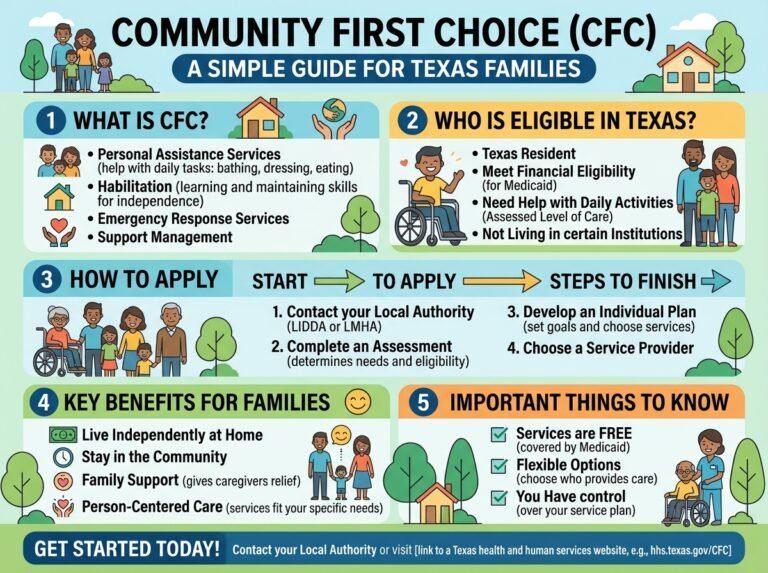
A Local Intellectual and Developmental Disability Authority (LIDDA) is a community-based organization that Texas Health and Human Services Commission (HHSC) designates as the single point of entry for publicly funded IDD services in a specific geographic area. In plain terms: it’s the front door. Whether a family is trying to get on a Medicaid waiver interest list, access service coordination, or simply understand what support options exist locally, the LIDDA is where that process starts.
LIDDAs serve as the single point of entry for certain publicly funded intellectual and developmental disability services and supports for people residing within their designated service area. Each LIDDA is tied to a designated local service area made up of one or more Texas counties, and every Texas county is covered by exactly one LIDDA.
What a LIDDA Actually Does
Under Texas Health and Safety Code and Texas Administrative Code, each LIDDA is responsible for planning, policy development, coordination, resource allocation, resource development, and oversight of community IDD services in its area. In practice, that translates to concrete help for families:
- Information and referral — explaining what services and supports exist and how to access them
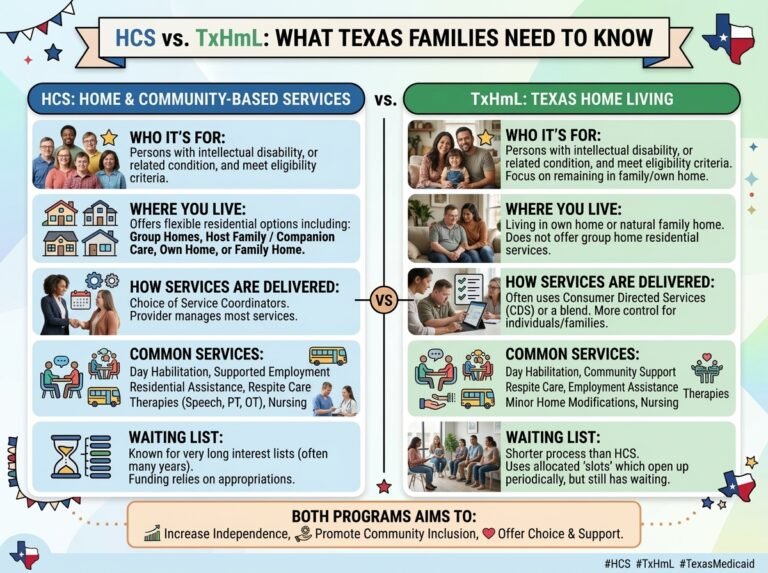
- Interest list management — adding your loved one’s name to waitlists for programs like the Home and Community-based Services (HCS) Program, Texas Home Living (TxHmL), and other Medicaid waivers
- Service coordination — connecting individuals to eligibility determinations, assessments, and ongoing case management
- Person-directed planning — helping individuals and their legally authorized representatives shape a plan built around their own goals and preferences
Because interest lists for waiver programs typically don’t have immediate openings, HHSC recommends adding your name as early as possible — even before you know exactly which service you’ll need.
Here’s the Key Part: Your LIDDA Depends on Your County
This is the detail that trips up a lot of families, especially in a fast-growing, multi-county area. LIDDAs are assigned geographically, and HHSC currently designates 41 LIDDAs across Texas, each covering a defined set of counties.
For families in the greater Houston region, that means the right LIDDA depends entirely on which county you live in:
- Fort Bend County (including Sugar Land, Missouri City, Rosenberg, and Richmond) is served by the Texana Center, headquartered at 4910 Airport Ave., Building D, in Rosenberg, which also covers Austin, Colorado, Matagorda, Waller, and Wharton Counties.
- Harris County (including Houston and surrounding communities) is served by The Harris Center for Mental Health and IDD, located at 9401 Southwest Freeway in Houston.
So two families living just a few miles apart — one in Sugar Land, one just across the county line in Harris County — will actually work with two entirely different organizations. That’s why it’s worth confirming your specific LIDDA rather than assuming based on the nearest big city.
Your Action Step
Don’t just file this acronym away — use it. Here’s what to do next:
- Identify your county of residence. This is what determines your LIDDA, not your mailing address or nearest city.
- Look up your LIDDA’s contact information. HHSC maintains an official, searchable directory at resources.hhs.texas.gov/directories/lidda, or you can use HHSC’s general contact search tool.
- Call and schedule an intake or initial meeting. LIDDA staff can walk you through which interest lists apply to your situation and what documentation you’ll need.
- Ask about every relevant interest list — not just one. Since waiver programs can have years-long waits, getting on a list as early as possible matters, even if you’re not ready to use the service yet.
For Fort Bend County families, Texana Center can be reached at 866-483-9262 or 281-239-1300, with a 24-hour crisis line at 800-633-5686. Harris County families can reach The Harris Center at 713-970-7000, with a crisis line at 866-970-4770.
The Bottom Line
A LIDDA isn’t just bureaucratic paperwork — it’s the gateway to real, tangible support for individuals with intellectual and developmental disabilities and the families who care for them. Knowing which LIDDA serves your county, and reaching out sooner rather than later, can make a meaningful difference in how quickly your family gets connected to the services you need.
Last reviewed: September 2026
This article is provided for general educational purposes. It does not determine eligibility for Medicaid, Texas Home Living, the Home and Community-based Services (HCS) Program, or any other Texas Health and Human Services program or service coordinated through a LIDDA. Eligibility, assessments and authorized services are determined according to applicable Medicaid and Texas Health and Human Services requirements. Program requirements may change.