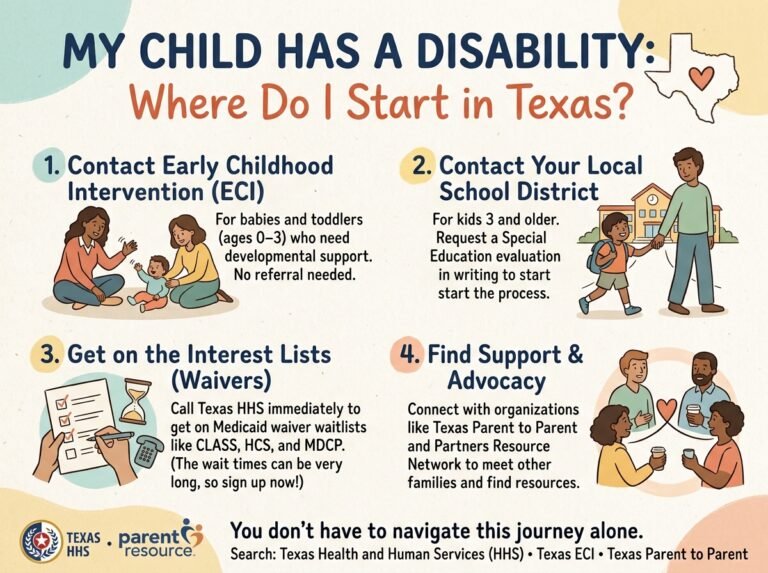

Your child may be 3, 7 or 12 years old.
They may be doing well at home right now.
You may already have private insurance or Medicaid.
You may think:
“We don’t need HCS or TxHmL right now. I’ll look into those programs when my child is older.”
But learning about the interest lists early can be an important part of planning for your child’s future.
Texas has programs that provide long-term services and supports to eligible people with intellectual and developmental disabilities.
Two programs families with IDD should know about are Home and Community-based Services (HCS) and Texas Home Living (TxHmL).
You do not need to understand everything about these programs before asking about the interest lists.
Want to understand the programs first?
→ [What Is HCS? A Simple Guide for Texas Families]
→ [What Is TxHmL? A Simple Guide for Texas Families]
What Is an Interest List?
An interest list records that a person is interested in receiving services through a program when an opportunity to apply becomes available.
You may also hear people call it a:
- waiver interest list;
- waiting list; or
- Medicaid waiver list.
Texas uses the Community Services Interest List (CSIL) system to maintain interest-list information.
For HCS and TxHmL, the Local Intellectual and Developmental Disability Authority (LIDDA) is an important contact for the interest-list process.
Not sure what a LIDDA is or why your family may need one?
→ [What Is a LIDDA? A Simple Guide for Texas Families]
Why Should I Learn About This While My Child Is Young?
Because your child’s needs may change.
Think about your child today.
Now think about your child at 16.
At 18.
At 25.
At 35.
The support your family can provide today may be very different from what will be possible years from now.
Your child may eventually need help with personal care, daily living skills, employment, community activities, behavioral support, therapies or other long-term supports.
You cannot know exactly what your child will need years from now.
That is one reason to learn about the interest lists before there is a crisis.
My Child Is Only 5. Isn’t That Too Young?
Do not assume your child is too young to ask.
If your child has an intellectual or developmental disability or related condition, contact your LIDDA and ask whether your child should be added to the HCS or TxHmL interest list.
You do not have to wait until your child becomes an adult to start asking questions.
Start with:
“My child has a developmental disability. Should my child be on the HCS or TxHmL interest list?”
Does Joining an Interest List Mean My Child Has HCS or TxHmL?
No.
This is an important distinction.
Being placed on an interest list does not mean your child has been approved or enrolled in HCS or TxHmL.
It does not mean services will begin immediately.
The interest list records your family’s interest in the program. When an enrollment opportunity becomes available, there is still an eligibility and enrollment process.
Your child must meet the applicable program requirements before services can begin.
Should I Ask About HCS, TxHmL or Both?
Ask about both.
HCS and TxHmL are different programs with different services and requirements.
You do not have to decide today which program your child may need years from now.
Ask your LIDDA:
“Should my child be added to the HCS interest list, the TxHmL interest list, or both?”
You do not have to decide today which program your child may need in the future. Your LIDDA can explain the interest-list process and help you understand the next steps.
What Is a LIDDA?
LIDDA stands for Local Intellectual and Developmental Disability Authority.
Your LIDDA can be an important starting point when you are trying to understand Texas IDD services, including the HCS and TxHmL interest lists.
Texas has different LIDDAs serving different areas of the state.
If you have never contacted one before, start here:
→ [What Is a LIDDA and How Can It Help My Family?]
What Happens After My Child Is Added?
Keep a record of:
- the date your child was added;
- which interest list or lists your child was added to;
- the name of the person or office you spoke with;
- any confirmation or information you receive;
- letters or notices you receive; and
- the contact information you provided.
Keep this information in your family’s services folder.
Keep Your Contact Information Current
This is extremely important.
Families move.
Phone numbers change.
Email addresses change.
Years can pass while your child remains on an interest list.
Make sure the appropriate agency has your current contact information.
If you receive a letter, phone call or other communication about your child’s interest list, respond to it.
If you do not understand the communication, call and ask:
“Is this related to my child’s interest list, and do I need to respond?”
What If My Child Is Already Getting Other Services?
Still ask about the interest lists.
Your child may currently receive Medicaid, STAR Kids, CFC, personal care services, school services, private insurance or other assistance.
Those services may be helping your family today.
HCS and TxHmL may become important as your child’s needs change.
Learning about future options does not mean you have to stop using services your child currently receives.
What If We Don’t Need HCS or TxHmL Right Now?
That is one reason to learn about them now.
Planning while things are stable gives you time to understand your options.
Your child’s needs may change as they grow.
Your family’s circumstances may change too.
Parents get older. Children leave school. Caregiving needs change. A young child eventually becomes an adult.
You cannot predict everything your family will need.
You can learn about the options that may be available.
Questions to Ask Your LIDDA
You can keep your first conversation simple:
“Should my child be on the HCS interest list?”
“Should my child also be on the TxHmL interest list?”
“What date was my child added?”
“How can I confirm that my child’s contact information is current?”
“Who should I contact if our address or phone number changes?”
Write down the answers and keep them with your child’s important records.
Don’t Be Afraid to Ask
Your child does not have to be an adult before you begin thinking about adulthood.
And your family does not have to be in crisis before you begin learning about long-term services.
If you have a child with IDD and have never heard of the HCS or TxHmL interest lists, start with:
“Should my child be on an interest list?”
If your child is already on one, ask:
“Can I confirm that my child’s information is current?”
Learning about an interest list does not commit your family to using a program later.
It gives you information that may become important as your child grows.
Want to Learn More?
If some of these terms are new to you, you can learn more in our other family guides:
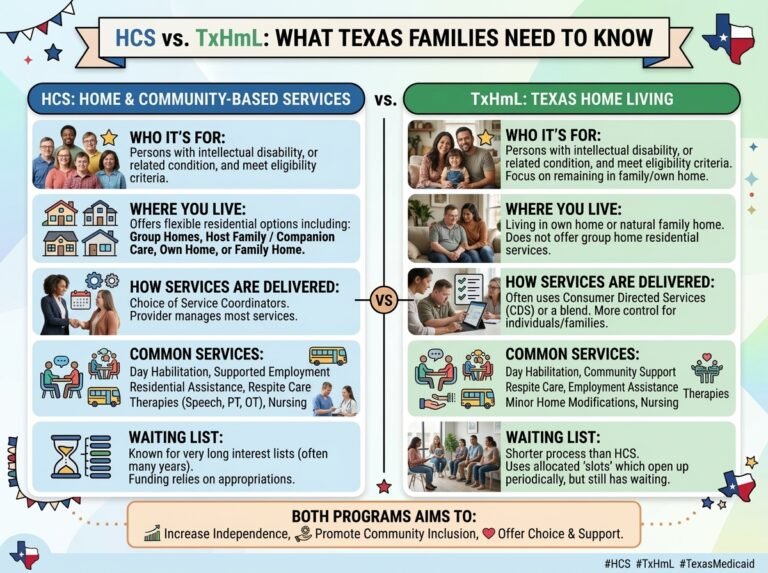
→ [HCS vs. TxHmL: What Texas Families Need to Know]
Learn the differences between these two Texas IDD programs and why families may hear about both.
→ [What Is a LIDDA? Your Starting Point for IDD Services in Texas]
Learn what your Local Intellectual and Developmental Disability Authority does and why it can be an important first contact for your family.
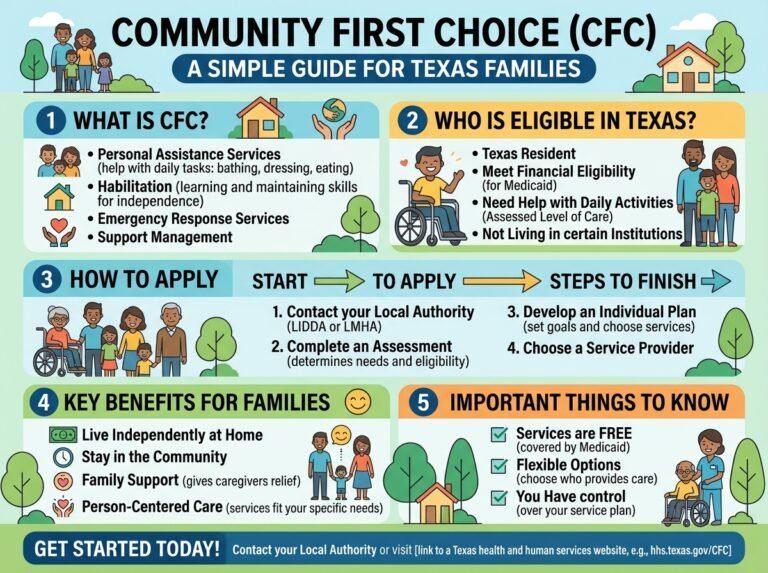
→ [What Is Community First Choice (CFC)? A Simple Guide for Families]
Learn about CFC and how eligible individuals may receive personal assistance and habilitation services through Medicaid.
Already Receiving Services?
Your child may already receive Medicaid, STAR Kids, CFC, personal care services, school services or other assistance.
Those services can help meet needs today while you also learn about HCS and TxHmL for the future.
If you are unsure how CFC fits into the picture:
→ [What Is Community First Choice (CFC)? A Simple Guide for Families]
If you are trying to understand the difference between HCS and TxHmL:
→ [HCS vs. TxHmL: What Texas Families Need to Know]
.
Last reviewed: September 2026
This article provides general educational information. Placement on an interest list does not guarantee eligibility or enrollment in HCS, TxHmL or another Medicaid program. Eligibility and enrollment are determined according to applicable Texas Medicaid and HHSC requirements.
Official HHSC references: HHSC Community Services Interest List form and instructions and HHSC LTSS Waiver Interest List Questionnaire.